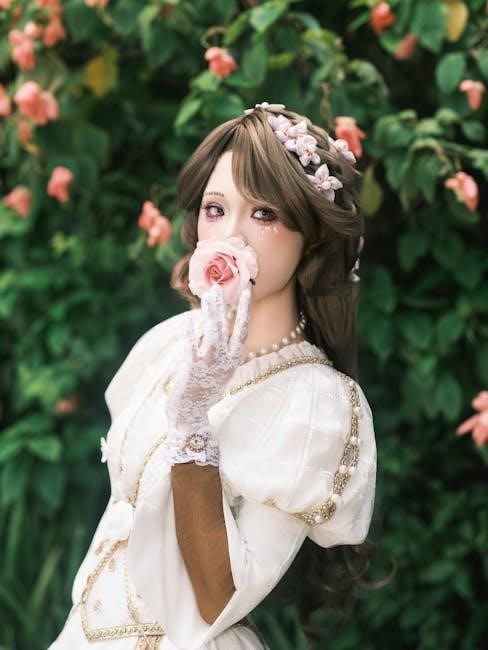
Understanding the Villainess Archetype
Navigating affections is crucial; Yoon Miso and Tiararose demonstrate avoiding fate through strategic gameplay, demanding a calculated approach to romance and interactions.
Historical Roots of the Villainess
The villainess archetype, while seemingly modern due to the isekai boom and otome game adaptations, possesses surprisingly deep historical roots; Traditionally, female antagonists weren’t simply ‘evil’ but often represented societal anxieties surrounding female power and agency. They challenged established norms, embodying ambition and independence – traits historically discouraged in women.
Early literary examples often punished these characters, reinforcing patriarchal structures. However, the modern villainess, exemplified by figures like Tiararose, subverts this trope. She’s not seeking redemption, but control over her own narrative. This shift reflects a contemporary fascination with complex female characters who reject traditional romantic expectations, prioritizing self-preservation and strategic maneuvering over falling for the protagonist, a key element in avoiding a ‘cursed fate’ as seen in Yoon Miso’s story.
Common Tropes and Expectations
The modern villainess narrative frequently employs specific tropes. Reincarnation into a pre-determined role, often within an otome game setting, is prevalent. Expectation dictates a tragic end – death or exile – unless the villainess actively alters the storyline. This fuels a proactive, rather than reactive, approach to relationships.
A core expectation is emotional detachment. Displays of vulnerability are weaknesses to be avoided. Instead, calculated interactions and strategic manipulation are favored. The ‘opposites attract’ dynamic is actively resisted; the protagonist represents a threat to control. Bite-size labels and formulaic fiction often reinforce these tropes, but skilled villainesses, like those navigating exaggerated drama worlds, utilize them to their advantage, ensuring they remain firmly in control of their destiny and avoid unwanted affections.

Psychological Barriers to Affection
Prioritize self-preservation; reframing positive interactions as manipulative attempts and suppressing empathy are vital defenses against emotional entanglement and a cursed fate.
Emotional Detachment Techniques
Cultivate a clinical perspective: View potential romantic interests as pieces within a larger game, much like navigating the storyline of an otome romance. Recognize that their actions are predictable, driven by pre-defined narrative roles, and not genuine affection.
Practice cognitive distancing: When faced with kindness or attention, immediately analyze the underlying motive. Assume ulterior motives – a desire for power, manipulation, or simply fulfilling a plot point. Dismiss any feelings of warmth as a weakness, a vulnerability to be suppressed.
Employ mental compartmentalization: Separate your true self from the persona you project. The villainess is a role, a performance. Do not allow yourself to become emotionally invested in the character’s interactions, maintaining a firm boundary between reality and the fabricated world.
Cognitive Reframing of Positive Interactions
Reinterpret gestures as strategic maneuvers: Any act of kindness from a potential suitor isn’t genuine care, but a calculated attempt to influence events or exploit a weakness. View gifts as bribes, compliments as reconnaissance, and concern as a means to control.
Deconstruct displays of affection: Analyze romantic overtures through the lens of game mechanics. Their “falling first” isn’t love, but a programmed response, a predictable trope. Recognize that their attraction is based on a fabricated image, not your true self.
Focus on the inevitable outcome: Remind yourself of the predetermined narrative. Even if a connection seems to form, it will ultimately lead to your character’s downfall or suffering. This perspective inoculates against emotional investment.
Suppression of Empathy and Compassion
Compartmentalize emotional responses: Treat all characters – protagonist included – as pieces on a game board, devoid of genuine feeling. Their joys and sorrows are irrelevant; focus solely on how their actions impact your strategic objectives.
Practice detached observation: When confronted with displays of vulnerability, analyze them clinically. Identify the emotional manipulation at play, rather than experiencing any sympathetic resonance. Remember, weakness is an invitation for exploitation.
Reinforce self-preservation: Prioritize your own survival and the completion of your assigned narrative above all else. Compassion is a liability, a distraction from the ultimate goal. Acknowledge that sentimentality will only lead to a predetermined, unfavorable fate.

Strategic Manipulation & Control
Mastering power dynamics is key; exploit weaknesses and control interactions, mirroring the calculated gameplay seen in otome games to maintain dominance and avoid attachment.
Identifying and Exploiting Weaknesses
A discerning eye is paramount. Observe the protagonist’s ideals and motivations – understanding their heroic nature is the first step towards control. Recognize their vulnerabilities; perhaps a strong sense of justice, a hidden insecurity, or a naive trust in others. These are leverage points.
Exploitation isn’t about cruelty, but about maintaining distance. Subtly challenge their beliefs, present moral dilemmas, or create situations where their principles conflict with their desires. This prevents emotional entanglement by framing interactions as strategic maneuvers, not genuine connection. Remember, the goal isn’t to destroy them, but to ensure they remain predictable and manageable, fitting neatly within your pre-determined narrative – a narrative where you remain firmly in control, and affection has no place.
Maintaining Power Dynamics
Control is the cornerstone of detachment. Never allow yourself to be in a position of dependence, emotional or otherwise. Project an aura of self-sufficiency and unwavering resolve. Ensure all interactions occur on your terms, dictating the pace and subject matter. This isn’t about dominance, but about safeguarding your emotional core.
Subtly steer conversations away from personal topics, redirecting focus to matters of strategy or political maneuvering. Utilize calculated interactions, always presenting a carefully constructed facade. Remember, vulnerability is a weakness. By consistently maintaining the upper hand, you create a buffer against unwanted affections, ensuring the protagonist views you as an obstacle, a rival, or a force to be reckoned with – anything but a potential romantic interest. This distance is your shield.
The Art of Calculated Interactions
Every exchange must serve a purpose, beyond simple pleasantries. Analyze each individual – their desires, weaknesses, and motivations – before engaging. Frame your responses to subtly manipulate perceptions, reinforcing your desired image. Remember, you are playing a role, completing a storyline, as Yoon Miso does, or accepting an in-game judgment like Tiararose.
Employ misdirection and ambiguity. Offer just enough information to maintain engagement, but never reveal your true thoughts or feelings. Master the art of the non-committal answer, the polite dismissal, and the strategically placed compliment designed to disarm rather than endear. These interactions aren’t about connection; they’re about control, ensuring no one breaches your carefully constructed defenses against affection.

Navigating Romantic Scenarios
Anticipate advances and deflect with subtlety, mirroring Tiararose’s acceptance of fate, but actively steering interactions away from emotional entanglement and vulnerability.
Recognizing Early Warning Signs of Attraction
A villainess must remain vigilant. Initial signs are deceptively subtle – prolonged eye contact, mirroring of behaviors, or an unusual attentiveness to your words. These seemingly innocent gestures represent a potential breach of emotional defenses. Observe any deviation from expected interactions; a protagonist’s persistent presence or attempts at ‘helpful’ gestures are red flags.
Be acutely aware of internal responses. A fleeting warmth, a slight quickening of the pulse, or even a momentary lapse in critical judgment are dangerous indicators. Dismiss these as mere physiological reactions, not genuine feelings. Remember, the goal is to manipulate the narrative, not become a participant in a romantic subplot. Prioritize strategic detachment and maintain a calculated distance to avoid compromising the mission.
Deflecting Advances with Subtlety
Direct rejection invites conflict; subtlety is paramount. Employ dismissive politeness – acknowledge the advance, then swiftly redirect the conversation. Feign disinterest by discussing practical matters or highlighting the protagonist’s flaws. A carefully placed remark about differing ambitions or incompatible personalities can effectively create distance.
Master the art of the non-committal response. Vague affirmations or ambiguous statements leave no room for misinterpretation. Utilize humor, but ensure it’s laced with a hint of condescension. Remember, the aim isn’t to wound, but to discourage. Maintain an air of superiority and remind them (and yourself) of the power dynamics at play. Avoid any behavior that could be construed as encouragement or vulnerability.
Creating Distance Through Misdirection
Shift focus; control the narrative. Introduce alternative romantic interests, even fabricated ones, to dilute the protagonist’s perceived exclusivity. Discuss elaborate plans unrelated to them, emphasizing your ambition and independence. Engage in activities that deliberately exclude them, showcasing a life brimming with purpose beyond their attention.
Cultivate a reputation for being preoccupied or difficult to reach. Employ a network of allies to spread carefully crafted rumors – rumors of engagements, secret missions, or demanding responsibilities. Always appear busy and unavailable, subtly reinforcing the message that their affections are unwelcome and inconvenient. Remember, a well-placed distraction is often more effective than a direct confrontation.

Dealing with Protagonist Interference
Anticipate their ideals; counter heroic motivations with pragmatic strategies, exploiting their predictable patterns to maintain control and avoid emotional entanglement, as seen in dramas.
Understanding Protagonist Motivations
Dissecting the hero’s core beliefs is paramount. Protagonists, often driven by unwavering ideals and a strong moral compass, present a predictable, yet potentially disruptive, force. They typically operate on principles of justice, compassion, and a desire to ‘save’ others – qualities a villainess must exploit. Recognize that their actions stem from a need to fulfill a narrative role, often involving overcoming obstacles and achieving a predetermined ‘happy ending’.
Understanding this inherent need for resolution allows for manipulation. Anticipate their attempts to ‘redeem’ or ‘correct’ your actions, and preemptively frame your behavior to appear justifiable, or even necessary, within the context of the story. Their romantic inclinations are equally predictable; they seek partners who embody virtue and align with their worldview. Therefore, presenting an image of coldness and detachment is crucial to deflect unwanted attention and maintain control of the narrative.
Counteracting Heroic Ideals
Subverting expectations is key to maintaining dominance. Heroic ideals, rooted in compassion and justice, are vulnerabilities to exploit. Present scenarios where adherence to those ideals yields negative consequences, subtly demonstrating their impracticality. Frame your actions not as malicious, but as pragmatic solutions to complex problems – a necessary evil for achieving a greater, albeit self-serving, outcome.
Challenge their black-and-white worldview by introducing moral ambiguities. Demonstrate that ‘good’ intentions can pave the road to ruin, and that sometimes, difficult choices are required; Utilize misdirection and calculated interactions to portray yourself as a rational actor, operating outside the constraints of their idealistic framework. Remember, the goal isn’t to defeat their ideals, but to render them ineffective in influencing your actions or eliciting sympathy.
Utilizing Antagonistic Strategies
Proactive disruption is paramount; don’t merely react, orchestrate conflict. Employ calculated manipulations to position the protagonist as an obstacle to your goals, forcing them into reactive stances. Leverage their inherent desire to ‘fix’ things against them, creating scenarios where their attempts to help inadvertently exacerbate problems – problems you engineered.
Cultivate allies who benefit from your success, creating a network of support that isolates the protagonist. Spread carefully crafted misinformation to undermine their credibility and sow discord among their allies. Remember, the aim isn’t brute force, but strategic dismantling of their influence. Present yourself as the logical, efficient alternative, subtly highlighting their naiveté and idealistic flaws. Maintain control through calculated antagonism, ensuring they remain perpetually off-balance.

Maintaining the Facade
Emotional control is key; project coldness and suppress vulnerability, mirroring Tiararose’s acceptance of her fate, ensuring no chinks appear in your armor.
Projecting an Image of Coldness

A chilling exterior is paramount. Cultivate an aura of detachment, mirroring the calculated interactions necessary to navigate a predetermined storyline, as seen with characters like Yoon Miso. Avoid displays of warmth or genuine emotion; these are weaknesses easily exploited. Master the art of the dismissive glance, the curt reply, and the carefully constructed indifference. Remember, vulnerability invites interference, particularly from protagonists driven by heroic ideals.
Your expressions should be carefully controlled, devoid of any hint of affection or empathy. Present a facade of self-sufficiency and unwavering resolve. Let your actions speak of ambition and strategic thinking, not longing or desire. This isn’t about genuine feeling, but about maintaining control and preventing unwanted attention. A cold demeanor is your shield, protecting you from the pitfalls of romantic entanglement and ensuring you remain the master of your own destiny.
Controlling Emotional Expression
Suppression is key to survival. The villainess must become a master of emotional regulation, mirroring the calculated composure needed to navigate a pre-written narrative, much like Tiararose’s acceptance of her fate. Any outward display of affection, vulnerability, or even mild interest is a dangerous lapse in judgment. Practice a neutral facial expression, a carefully modulated tone of voice, and a deliberate control over body language.
Internalize your feelings; do not allow them to surface. View emotional responses as weaknesses to be overcome, not experiences to be embraced. Analyze interactions objectively, focusing on strategic advantage rather than personal connection. Remember, the protagonist’s ideals can exploit any perceived softness. A controlled exterior is your armor, shielding you from the chaos of unwanted affections and preserving your carefully constructed image.
Avoiding Vulnerability
Self-preservation demands detachment. Vulnerability is an open invitation for manipulation, a fatal flaw in the villainess’s carefully constructed facade. Like Yoon Miso striving to alter her predetermined storyline, you must erect impenetrable barriers around your core self. Never reveal personal history, insecurities, or genuine desires. Maintain a carefully curated persona, projecting an image of coldness and self-sufficiency.
Anticipate attempts to elicit empathy or compassion and preemptively deflect them with calculated indifference. Remember, the protagonist’s heroic ideals thrive on perceived weakness. Emotional investment is a liability; prioritize strategic advantage above all else. A fortress of emotional isolation is your strongest defense against the unpredictable currents of affection and the threat of a rewritten fate.